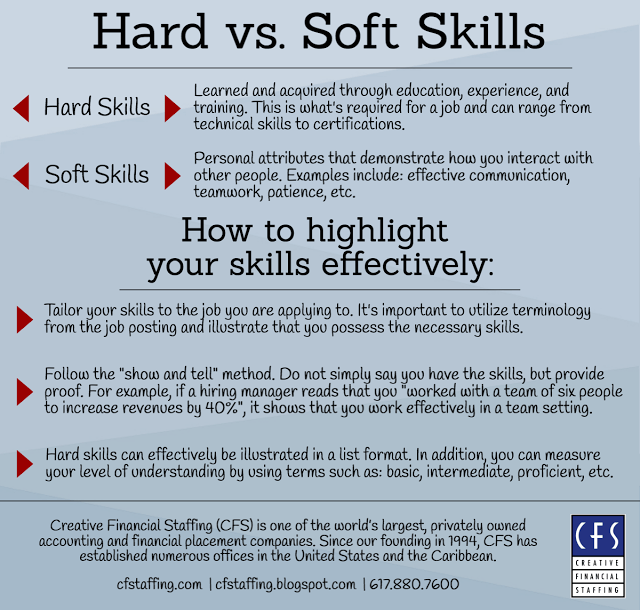
Have questions about your job search or your resume? We want to hear them! Comment below or contact one of our expert recruiters today! Find the closes CFS location to you here.
Have questions about your job search or your resume? We want to hear them! Comment below or contact one of our expert recruiters today! Find the closes CFS location to you here.
October 17, 2016
With approximately 70% of American high school graduates enrolling in colleges and universities each year, a college degree has become an essential stepping stone to landing a great first job.
But when it to comes to your earning potential, not all degrees are created equal.
So which majors really pay the highest?
Through an analysis of hundreds of thousands of resumes and corresponding salary reports, Glassdoor has determined which majors pay the most during the first five years out of college. While STEM majors take most of the top spots, other majors can also pay you generously. Plus, for each major, we’ve identified three of the most popular jobs that new grads really take upon entering the real world.
The 50 Highest Paying College Majors are:
1. Computer Science
2. Electrical Engineering
3. Mechanical Engineering
4. Chemical Engineering
5. Industrial Engineering
6. Information Technology
7. Civil Engineering
8. Statistics
9. Nursing
10. Management Information Systems
11. Finance
12. Mathematics
13. Biomedical Engineering
14. Accounting
15. Economics
16. Physics
17. Biotechnology
18. Architecture
19. Fashion Design
20. Business
21. International Relations
22. Graphic Design
23. Marketing
24. English
25. Political Science
26. History
27. Human Resources
28. Journalism
29. Advertising
30. Philosophy
31. Environmental Science
32. Social Science
33. Spanish
34. Communications
35. Interior Design
36. Chemistry
37. Music
38. Film Studies
39. Public Relations
40. Sports Management
41. Education
42. Anthropology
43. Hospitality Management
44. Biochemistry
45. Liberal Arts
46. Psychology
47. Sociology
48. Healthcare Administration
49. Social Work
50. Biology
So for those pulling their hair out trying to decide on a college major, what does this mean for you?
“If college students want to land a high-paying job after graduation, they should strongly consider majoring in science, technology, engineering, or math,” says Dr. Andrew Chamberlain, Glassdoor Chief Economist. “STEM majors are in demand by the technology and health industries, which offer higher paying jobs that are better protected from competition or automation.”
______________________________________________________________________
Which city should you move to after college? Consider one of the Best Cities for Jobs
Which company should you work for? Check out Glassdoor’s Best Places to Work
Want to land that dream job? Read up on these 4 pro tips
How much money do you make? Share your salary to join the #ShareYourPay movement.
______________________________________________________________________
Methodology: Nearly 500,000 resumes were analyzed for Glassdoor’s report on the 50 Highest Paying College Majors. For a major to be considered, Glassdoor must hold at least 400 distinct resumes as of 10/03/16, in which a job seeker and/or employee has indicated graduating from college with the corresponding major. To determine the median base salary for each major, career progression data, including job titles, within the first five years of work upon graduating from college was analyzed with corresponding salary data, submitted by employees on Glassdoor. To determine the rankings, majors were then sorted by their corresponding median base salary within the first five years upon graduating from college or university.
If you have multiple offers for an internship position, how do you decide which one to take? First of all, congratulations—this is what’s referred to as a “high class problem.” Second, by considering the following information, you’ll stand a great chance of making the right choice and fast-tracking your career.
Have questions about your job search? We want to hear them! Comment below or contact one of our expert recruiters today! Find the closes CFS location to you here.
Read the original article published on Huffington Post.
Posted by Creative Financial Staffing at 9:29 AM

Crude Oil and Commodity Prices
October, Tuesday 11 2016 – 09:35:22
|
|
||||||||||||||||||||||||||||||||||||||||
|
|||||||||||||||||||||||||||||||||||||||||
Click to access Purchasing_Managers_Index.pdf
The Houston Purchasing Managers Index (PMI), a short-term leading indicator for regional production, registered 48.5 in September, up from 46.1 in August, according to the latest report from the Institute for Supply Management-Houston (ISM-Houston). Although the PMI continues to show economic contraction, the September reading is the highest since July ’15.
The PMI has a possible range from zero to 100. Readings above the neutral point of 50 indicate likely growth in production over the next three to four months; readings below 50 suggest contraction. With the September reading, the PMI has signaled economic contraction in Houston for 21 consecutive months.
“Health care remained the strongest sector, reporting moderately above neutral,” reports Ross Harvison, ISM-Houston Business Survey Committee Chair. “Durable goods manufacturing, non-durable goods manufacturing, oil and gas, transportation, wholesale trade and most services activities reported near neutral. Engineering and construction continued to report well below neutral results.”
The Partnership has been tracking the PMI since its inception in January ’95. The alltime low for the Houston PMI was in March ’09, when the indicator fell to 39.0. The all-time high was in January of ’06, when the PMI reached 67.9. Over the past 21 years, the PMI has tracked at 50 or above for 212 months and below 50 for 49 months.
The Houston PMI is derived from monthly surveys of local purchasing managers representing various industries such as manufacturing, healthcare, electronics, finance and energy. The index is based on eight components: sales/new orders, production, employment, purchases, prices paid, lead times, purchased inventory and finished goods inventory.
Prepared by Greater Houston Partnership Research Department
Patrick Jankowski, CCR Senior Vice President, Research 713-844-3616 pjankowski@houston.org
Jenny Philip Director, Research 713-844-3615 jphilip@houston.org
Josh Pherigo Analyst, Research 713-844-3617 jpherigo@houston.org


Our client truly wants to hire someone who wants to be part of the leadership team and work with operations. This is a “impact the bottom line” controller role. They are centrally located and definitely have a “small business” feel to them even though they are owned by a large global company!
The Controller will be accountable for the reliability and accuracy of financial reporting, tax returns, and payroll for both entities and report directly to the General Manager. They will be managing a team of 2.
Responsibilities:
• Day to day duties will include managing A/R and A/P functions, performing inventory adjustments and account reconciliations
• Month-end closing procedures, including production of Group monthly reporting package
• Year-end financial statements and audit
• Lead Budget process
• Support business with information and analysis and performing admin tasks
• Preparing monthly sales tax returns and provide information for income tax return
View original post 132 more words
When you’re working full-time for a company, it’s hard to find time to do anything after work. All of your energy has been spent throughout the day, and all you want to do is relax. However, if you don’t take action toward finding a new job, then it will take you forever to make that happen. Maybe disliking your current job is just not enough motivation for you to start looking for a new one.
Unless you spend time doing your search, you’ll get nowhere. If you are having problems finding the motivation to look for a new job, here are some tips that can help you stay motivated.
Set a specific amount of time and stick to it – Most of us have a problem with doing tasks when it seems like it’s a lot of work; it’s weird, but that’s how our brain works. It’s easier to start searching for a job when you know you’ll be done in 30 minutes rather than a few hours.
Once you have set the amount of time you want to work on your search, it’s important that you stick to the plan. If you still want to continue searching after 30 minutes, then by all means, continue—but don’t cut corners with your plan.
Make it a habit – The hardest part of your plan of action will be the first few days, since you’re still adjusting to your new schedule. After your body learns to follow the schedule, though, it’ll be a whole lot easier. It’s important that you follow a ritual after a day’s work so that while you progress in your search, you can still have time to enjoy the rest of the day.
Organizing your search – The job search is a process that can be uncertain and sometimes overwhelming. There are a lot of aspects you need to consider, and if you don’t plan your search every day, you can get stuck in a loop of a never-ending search that goes nowhere.
Set goals and follow them religiously – Once you have organized how you’re going to do your search, you also need to have goals that you can achieve daily/weekly/monthly. Having such goals will help you to motivate yourself when you see the goals that you are reaching.
Treat yourself – The most important part of motivating yourself is that you reward yourself for the hard work you do. When you get things done, don’t hold yourself back from rewards, whether it’s a nice meal or a relaxing massage. Rewards help you stay motivated, knowing that you will get something from the hard work you put in.

Alan is the creator of Interview Success Formula, a training program that has helped more than 40,000 job seekers to ace their interviews and land the jobs they deserve. Interviewers love asking curveball questions to weed out job seekers. But the truth is, most of these questions are asking about a few key areas. Learn more about how to outsmart tough interviewers by watching this video.



One year forecast is at 58 dollars a barrel!
Crude Oil and Commodity Prices
October, Friday 7 2016 – 08:30:45
|
|
||||||||||||||||||||||||||||||||||||||||
|
|||||||||||||||||||||||||||||||||||||||||
Opportunity offers competitive pay, benefits, flexible hours, and an opportunity to work with a great group of people.
Responsibilities:
• Perform Monthly Inventory Reconciliation and reserves calculation process
• Preparation of monthly Overhead allocation, Conversion Cost Spending Variances and Idle Capacity Expense
• Preparation of monthly yield loss variance analysis
• Preparation of monthly and quarterly Inventory Adjustments reporting
• Provide guidance to operations, procurement and finance personnel in the correction or proper treatment of inventory transactions to assure accurate accounting and reporting of inventory
• Prepare monthly product line analysis
• Prepare monthly budgets for manufacturing variances and outbound freight
• Prepare monthly Inventory Balance Sheet account reconciliations
• Prepare monthly and quarterly inventory volumes & cost reports
• Maintain work order-level volumes, costing and yield variance analysis models for use in refining standard productivity & yields
• Maintain fixed/variable conversion cost reporting and operating variance analysis models for use in refining standard conversion cost charging rates
Requirements:
Responsibilities
Minimum Requirements
Education Requirements:
Excellent Benefits :
Financial Analyst with 2 to 3 years of Big 4 or large regional public accounting firm experience needed. CPA preferred.
Responsibilities:
• Prepares financial and statistical reports and monitors trends and variances
• Assists in preparation of financial models
• Assists in the preparation of the operating budget
• Performs special projects as required by supervisor
Qualifications:
• Bachelor’s degree with a major in Finance or Accounting, or related business field
• A minimum of one (1) year financial or accounting experience
• Basic knowledge of Generally Accepted Accounting Principles (GAAP), knowledge of budgeting processes and principles, and knowledge of financial analysis and reporting principles
• Ability to use Microsoft applications including Excel and PowerPoint
• Ability to communicate effectively both verbally and in writing is essential
dlemaire@cfstaffing.com

Going on job interviews can be exhausting. Since the economy doesn’t seem to be getting much better, however, acing that interview is essential to getting ahead in your career.
With so much on the line, job seekers must arrive with their best foot forward when it’s time to meet the prospective employer. Still, job seekers often neglect to follow the essential interview rules, resulting in wasted opportunities.
You may find it hard to deal with job interviews, but there are simple things you can do to avoid disaster. Mastering the process requires preparation, effort and common sense. So, consider the following ideas before your next interview.
Plan. Give some serious thought to where your career is headed. It’s not enough just to say that you’re looking to make money. An employer will know if you don’t have a career plan. Besides, the last thing you need is to get the job, only to discover that it’s not the career you’re looking for.
Research. Do some research on the company and the scope of the job to help you decide if you can handle the responsibilities that go with it. Many employers will ask you what you know about their company and the position you’re applying for. To avoid having butterflies in your stomach, get to know the company, including its vision, mission, and values. Doing this helps you to provide more convincing answers.
Prepare. The most common mistake in job interviews is to overlook preparation. Being bright and having job experience is not enough to impress your employer. Take time to practice conveying your responses in a concise and engaging manner. Not preparing will greatly increase the chances that you’ll blow the interview. Do not take this lightly, especially if your future is on the line.
Dress smart. Always treat every job interview as if you’re going to an important meeting. Dressing informally is generally considered an insult to an employer. Men should wear a suit jacket and tie, and women can wear a formal blazer or pantsuit. Don’t mind it if the employer is wearing a casual shirt and comments about what you’re wearing. Dressing up for an interview will give them the idea that your action was a gesture of respect. Try it—you’ll be surprised how much it helps in an interview.
Be punctual. Never show up late for an interview. Being late will only start the interview off on the wrong foot. Who would want to hire someone who’s “fashionably late” on the first day? Put yourself in the employer’s shoes and imagine if you would want to hire people who aren’t showing up on time. Even if you’re confident that you are qualified, being late can ruin your chances.
These are just some of the tips to help you avoid failure in your next job interview. Work on these points and your success rate should increase in short order. So keep at it, and don’t give up until they say yes.
Alan is the creator of Interview Success Formula, a training program that has helped more than 40,000 job seekers to ace their interviews and land the jobs they deserve. Interviewers love asking curve ball questions to weed out job seekers. But the truth is, most of these questions are asking about a few key areas. Learn more about how to outsmart tough interviewers by watching this video.



Crude Oil and Commodity Prices
September, Thursday 29 2016 – 09:39:23
|
|
||||||||||||||||||||||||||||||||||||||||
|
|||||||||||||||||||||||||||||||||||||||||

Job searching takes more than just sending in your resume to the right company. In the age of digital, you also have to make an effort to clean up your social media accounts. Most companies today will look into a candidate’s online presence to learn more about the applicant and look for any warning signs.
Here are some tips to help improve your Facebook profile:
Use the “Intro” section to your advantage. Use this section wisely.It’s a chance to sell your personal brand. Be thoughtful as you revise this section.Consider what potential employers would want to know about you and what you have to offer.
Use the “About” section well. This will serve like a summary on LinkedIn or your resume. Highlight your skills, experiences and the unique characteristics that can help you stand out among the rest (from a professional standpoint, of course).
Update your work history and education. Facebook has recently made changes to users’ employment and education history profile sections, which now allow you to list jobsright under your intro. (Don’t allow this informationto be set to Public if your privacy is important to you.)
Check your privacy settings. You can always adjust your audience if you don’t want people searching for you using your email or phone number. You can also keep your profile from showing up on search engines. After making any adjustments,remember to preview your Facebook profile so you know how others see it.
Be professional at all times. Keep in mind that a potential employer could be checking your profile at any time. Therefore, avoid posting any profanity, inappropriate photos, or personal diatribes on any topic (particularly comments about your previous employers). Filter what you share, post or comment. Approach your social media with the mindset that anyone (including hackers) could access your info at any time.
Join Facebook Groups for jobs. Though Facebook isn’t a job board, you can use the Groups feature to find job postings in your field and location. Use the search function within Facebook to find what you’re looking for.
Find company insiders. You can also search for people working inside a company by using Facebook. Start by typing “people who work at XXXX company.” Look at the search results and see if you have mutual friends connected to employees there. From that point, an email introduction is the best way to get acquainted with any new people, rather than messaging them on Facebook.
Written by Alan Carniol
Senior Auditor – 30% travel – North Houston
Corporate Accounting Manager – Downtown (combo of public and industry)
Senior Auditor – 40% travel – Northwest Houston
Tax Manager – public accounting – 30 to 40 hour work week!
Non Profit Accounting Manager – Greeway Plaza area
IT Auditor – Greenway Plaza
AP Supervisor – West Houston



 1.54 3.00%


 Houston's F&A Recruiter and Talent Connector