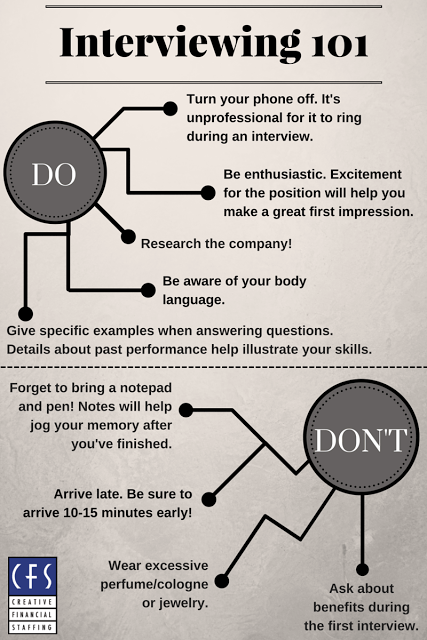
The worst questions to ask your interviewer

The worst questions to ask your interviewer

You want your interviewer to remember you, but not in a negative way. Your goal of an interview is to show that you are the best candidate for the open position and that you’ll fit in well with the company. Even if you demonstrate that perfectly, the interviewer still might not consider you because of one thing: what you ask at the end of the interview. The questions you ask have more impact than you may realize, so you need to be sure you don’t ask the wrong ones that leave a bad impression with the interviewer.

Some of our expert recruiters have put together the WORST questions you can ask in an interview that could cost you the job. You may have asked some of these before, but make sure to keep these of your list of questions!

Want to know what questions you should ask? Check out that post here!

Mary Gerber

Branch Manager, CFS Portland

I think you can ask any question as the process moves forward but the first interview is like a first date- you don’t want to ask any negative questions. Ask questions that allow the interviewer to reflect on positive events or experiences with their company. The most important part of a first meeting is that it leads to another meeting!

  • “Is there work/life balance?”

In the first interview don’t ask about work/life balance. You might be working 80 hours per week and be hoping to work only 60 hours per week, but the perception could be that you are looking for less than full time. You don’t want the interviewer thinking you’re not willing to put in the time to do the job.

  • “Why is this position open?”

Don’t ask why the position is vacant (at least not yet). This may cause the person leading the interview to reflect on a less than positive experience with the person who left the job, which could create a link between your interview and that negative memory.

  • “What would my salary and benefits package be?”

You should avoid bringing up money and benefits in the first interview. The more the employer knows about your skills and experiences and how those match up with the open opportunity the better the potential package will be at the offer stage. Sometimes this conversation can’t be avoided. If the interviewer asks, you can respond with something along the lines of, “Based on what I know so far, this is a great opportunity for me and I am excited to look at your best offer.”
Kristina Camacho
Executive Recruiter, CFS Orlando

  • “Do you have any suggestions on what I should do with my resume?”

This question won’t get you the job. You’ve been selected to interview already based off your resume, so there is never a valid reason to ask this. You don’t want the interviewer to think you don’t care enough about the role to send them a finalized resume. If you’re unsure about your resume, talk with a recruiter. It’s our job to help you cater your resume to a particular job, and we’ll scrutinize it more than any hiring manager will.

  • “When would I be promoted?”

They haven’t even seen your work yet! This question can make the interviewer wonder how long you’ll stay if they don’t promote you soon enough, potentially ruining your chances of ever being hired. No matter how good the conversation went, you should never let the interviewer know that you’re interested in the next role and not the one you’re there to interview for.

Joanna Cheng

Director, Branch Manager, CFS Atlanta

  • “Can I work from home?”

Unless the job posting explicitly talks about this as an option, you shouldn’t bring it up in an interview. You don’t want the interviewer to think you’re the type that avoids work or won’t get the job done.

  • “Do I get an office?”

You don’t want the interviewer to think you only want the job for the perks. Yes, it would be nice to have but it shouldn’t be a priority. This isn’t something that should matter enough to bring up in an interview.

  • “What kind of company is this?”

If you ask this, the interviewer will think you didn’t care enough about getting this job to do your research beforehand. You can almost guarantee your competition knows as much as they can about the company, and so should you. Instead, ask more specific questions that show you have done your research and are interested in the company’s future.

What other questions are bad to ask your interviewer? We’d love to hear them in your comments below! You can also reach out to one of our expert recruiters to discuss interviewing advice. You can find the closest CFS location to you here.

New Accounting & Finance Openings this week!

For more information email me at: dlemaire@cfstaffing.com

  • Director of FP&A – central Houston
  • Senior Accountant with splash of S/U Tax
  • Staff Auditor – North
  • Senior Auditor – North
  • AR & Credit Manager – non degreed – SW Houston
  • International Controller – 8 to 12 years of total experience
  • Tax Accountant Public Accounting
  • Senior Auditor Public Accounting

Other Hot Openings: 

  • Controller very small non profit
  • Payroll Accountant – Rosenberg
  • SEC Accountant – DT and Galleria
  • Senior Accountant – SW Houston
  • Controller – current SEC experience required – West
  • Staff IT Auditor
  • IT Senior Auditor
  • IT Audit Lead – 110K

10 of The Hardest Interview Questions & How to Answer Them via http://theundercoverrecruiter.com/

10 of The Hardest Interview Questions & How to Answer Them

http://theundercoverrecruiter.com/hardest-interview-questions-answers/


A job interview is always a daunting prospect, and in today’s economic downturn, companies are being more selective about who they hire. One of the ways they can filter out the unwanted applicants is to ask difficult questions.

Very often how these questions are answered makes the difference between success and failure. This tactic helps the employer find the right applicants, but also difficult questions provide an opportunity for those who are prepared with the right answers.

So, here are some of the tough questions you are likely to come across in a job interview, along with strategies to help you answer them.

1) What do you consider to be your weaknesses?

This is a tough one because it is asking you to be specific about things that are not your strong points. The trick here is to turn the negative into a positive. This can be achieved by turning a negative personal trait into a positive professional one. For example, you could mention that you tend to neglect family and friends when working on an important project, highlighting your high level of responsibility and determination to see the task through to ultimate success.

2) What are your strengths?

The important thing here is to highlight qualities and achievements that are directly related to the position you are applying for. One sure fire way to impress is to include the following skills,

  • Self-motivation
  • Willingness to work long hours
  • Ability to work well in a team
  • Initiative and creativity

3) Could you tell me a little about yourself?

This is a classic way for the interviewer to see how you carry yourself, as well as to assess your poise, style and ability to communicate. Don’t talk about childhood experiences, likes and dislikes, but rather recent personal and professional experiences that relate to the position you are applying for. A good idea is to prepare a short statement that describes who you are and what you can bring into the company.

4) What can you tell me about this company?

This question reveals whether you have done your research. If you want to make a serious impression on the interviewer, you must do your homework on the company background. All businesses have a web presence, so check out their web site thoroughly. Look for certain buzzwords that they use, and get a feel of what they are about. If they have a mission statement, make sure you understand it. Look for the following information,

  • When the company was established
  • What products and services they provide
  • What are their markets
  • Number of employees and branches

5) What is it that sets you apart from other candidates?

This really probes into your reasons for wanting this job. Show your readiness by describing how your career experience, personal qualities and achievements will be an asset for the company. Keep things on a professional level and focus on the benefits you will bring to the organisation.

6) Why did you leave your previous job?

This question might be rephrased if you are currently employed, yet the answer is still important. The current economic climate has pushed many talented people into the job market place, so don’t be ashamed to say you were part of a downsizing operation. If you left your previous job, it is better to merely say you “parted on good terms”, citing a lack of advancement opportunities within the company, or perhaps you felt the position wasn’t challenging enough.

7) Where do you see yourself in three years?

This question tells the interviewer about your ambitions. It isn’t a good idea to go overboard by saying you will be the next CEO, or be on the Board of Directors. On the other hand, you shouldn’t focus on just having a steady income either. Something balanced that highlights your desire to grow within the company, and to develop yourself professionally, while being a positive team player.

8) Are you a team player?

This is a question that requires more of an answer than a simple “yes”.  Give behavioural examples of team involvement, focusing on the overall result rather than your role. Having an open mind and being able to work well in a diverse range of environments is always a good thing to mention at this stage. This question will often lead to a further one concerning how you would deal with conflicts within the team, so be prepared.

9) What didn’t you like about your last job?

This is a loaded question that will attempt to reveal your weaknesses. Don’t complain about low salary or long hours, rather say something like you felt your responsibilities weren’t challenging enough.

10) Are there any questions you would like to ask?

All interviewees should be given the opportunity to ask questions, and it is a golden rule to do so. Prepare some relevant questions about your prospective employer; perhaps ask if there will be opportunities for professional development within the company. You could ask the interviewer what he or she likes about the company or perhaps enquire about the organisation’s long-term goals, which shows you have ambition.

Practicing these answers with a friend or colleague will go a long way towards arming you with the self-confidence necessary to carry yourself in a calm professional manner. This not only shows that you have prepared well, but also that you are someone who really wants the position, and has all the qualities to enhance the company. One final tip is to have piece of paper in front of you, with notes to be used as a prompt. This will add to your self-confidence, after all, it is a lot to remember. By following these pointers, you should shine above the competition, and the interviewer will notice your ability to remain calm under fire, while demonstrating a high level of competency.

Author: Guest Author at Goldmills.


7 Questions You Should Ask Yourself before Switching Jobs via http://www.social-hire.com/

7 Questions You Should Ask Yourself before Switching Jobs

http://www.social-hire.com/career–interview-advice/4013/7-questions-you-should-ask-yourself-before-switching-jobs?utm_content=buffer76a4c&utm_medium=social&utm_source=twitter.com&utm_campaign=buffer

When you feel tired of your existing work routine and life begins to look monotonous, many professionals tend to look for a change of scene. Some may think of vacations while others may turn to a more permanent solution like a change of job. The latter becomes even more complex when the individual begins to consider another field of work altogether. For such professionals, it is necessary that you sit down and mull over what you want and what you need. While it is no use to stay on in a rut, a change of career can be a tricky situation, especially if you are not certain of how things will shape up in the future. And since the grass always seems greener on the other side of the fence, it is vital for you to honestly answer these questions before you say good-bye to your existing job.
1. Why do I want to change my job?

You don’t want to jump out of the frying pan to land into the fire.  So you must have a solid reason for the job change. It could be because –

  • You are not interested in the area of work anymore
  • You have served for too long and feel taken for granted
  • You are undervalued and underpaid
  • Restructuring led to a change in your role that you hadn’t settled for
  • You feel you are not progressing
  • You don’t like your manager or co-workers

2. What type of work do I want to do?

Sit and analyze your current job and career. Then think of what you really want to do. Is your present position worth giving up for this aspiration? Try to determine what kind of work will make you happy and your life more pleasant. Rather than rushing the process, you can make less drastic changes and still be happy.

You can look for a different job the same industry, find a similar job in a different industry or simply modify your current profile. But do not try to change all these at the same time.  For instance, if you are a marketing manager with an MBA degree you can even venture into the field of online marketing and social media. It’s all about what prospects you would like to explore. You can either join an IT company offering such services or maybe even start providing freelance services from home which will then give you more flexibility.

Think of what whether you want to –

  • Meet new people
  • Do less paperwork
  • Have fewer people in your team
  • Travel
  • Have flexible work hours or work-from-home option

3. What transferable skills and capabilities do I possess?

  • Organizational skills
  • Detailed research work
  • Teaching or lecturing
  • Fundraising know-how
  • Effectively implementing ideas and initiatives
  • People skills

Transferable skills and capabilities like these help you in career change. Think about roles where you will be able to utilize them and you can decide better. You can even try a sideway move or a consultancy service.
4. What am I expecting?

When you think of a new career, make sure it is something you are passionate about. Think of the reason that is driving you today, will it drive you tomorrow? Even though you are likely to get a fat pay cheque in your new role, let it not be the only reason to fascinate you. You may have to do this work day in day out so look for more reasons to take it up. Also make sure that this profile is in harmony with your core principles and values.
5. Am I prepared to start all over again?

This can happen if you have decided to change your industry altogether. Even if you have agreed for a complete change, you still need to think about your family. Starting from square one may require them to live differently and more humbly.
6. How much salary do I need to earn?

This is probably the most crucial question you ought to ask yourself. Analyze you current finances and write down all expenses. Assess the income, outgoings, extra expenses like your child’s school fee or mortgages. This will give you a clear perspective of how much money you require to earn over a year. See if you can make any cuts to it. Then think of what your new job will provide.
7. Will I regret not moving?

People tend to regret not doing certain things. Will this be one of those decisions? If you think you will be blaming yourself for not moving on at the right time, you should probably go ahead and change what you don’t like. You should not sit down after five years and sulk about having the opportunity and not taking it.

These crucial questions (and their answers) will help you to evaluate your current position, think it through and clearly understand your future prospects. So take your sweet time and choose whatever is best for you!


9 Affirmations the Most Successful People Repeat Each and Every Day by Jeff Haden

What you say is often what you do — especially if you say it to yourself.

A friend of mine is big on daily affirmations and positive self-talk. He spends a few minutes every morning looking in a mirror and repeating, “I’m great. I’m awesome. I’m a superstar.”

He says his daily affirmations work for him but his approach has always left me a little flat. Why? There’s no action involved in his affirmations. He’s great… but what is he going to do with that greatness?

Achievement is based on specific actions, not on general thoughts. The same is true with how we treat people: to others we are what we do, not what we think.

And most importantly, genuine “success” means different things to different people. For some it’s money, for others it’s power and influence, for others it’s the strength of relationships… your definition of “success” is all that matters.

That’s why I like this list of affirmations a lot better. It comes from Mareo McCracken, a Global Growth Consultant and Revenue Leader at Axis Medical Technologies. (You might consider following him on LinkedIn; he often takes an unusual approach to overcoming the challenges most of us face.)

Here’s Mario:

The key driver of self-awareness is what we tell ourselves about our past, present, and future. Our self-talk becomes our personal stories. We believe what we tell ourselves. Self-talk combined with matching action is the number one way to change your life.

While I am no guru, I know that these are the stories you must tell yourself:

1. “I treat others the way they want to be treated.”

By treating others the way they want to be treated, my own personal fulfillment grows. I give respect and provide service. I show love, care, compassion, and consideration. I help others feel appreciated. I let others know they are important, that they matter, and that they are valuable. By valuing others, my confidence increases.

2. “I am ever grateful.”

Gratitude allows happiness to come into my life. I choose to show appreciation for what I have, who I know, what I can learn, and who I can help. I define and talk about the things I am grateful for on a daily basis. I know that the number one way for me to be happy is to choose to be grateful. The more thanks I show, the more my confidence increases.

2. “I am accountable.”

I am reliable. I am responsible. I never blame others, I never accept excuses. I take ownership of my successes as well as my mistakes. I know that my own performance is a direct result of what I think and the actions I take. By taking full-responsibility daily, my confidence increases.

3. “I believe in myself.”

When I fail, I learn. My failures are temporary because my perseverance is permanent. I push forward at all times because I know I can succeed. As I continually believe in myself, my confidence increases.

4. “I am positive.”

I look for the good in all people and situations. My mind is focused on the possibilities. When I think positive thoughts, positive things happen. The more I act in a positive manner, the more my confidence increases.

5. “I have high standards.”

I do not let mediocrity enter my life. I am honest. I do not apologize for striving for excellence. My quality of life is a reflection of my high standards. I rise and lift others with me. By living up to my personal high standards, my confidence increases.

6. “I follow my heart.”

Time is precious and everyone has something that they are passionate about. I do what makes me and those around me happy. The cost of not following my heart is too great, I am going to live life with no regrets. As I follow my heart, my confidence increases.

7. “I trust my gut.”

I value my intuition since it is based on my subconscious-mind and conscious-mind working in harmony. I know what is true, and I know what I want to be true. I trust my gut feelings, my inner voice. As I trust myself, my confidence increases.

8. “I am resilient.”

I have overcome many challenges and will overcome many more. The times that are the toughest, are the times I learn the most. I never back down. I work hard and I push through. As I act in a resilient manner, my confidence increases.

9. “I help people.”

I matter because I make a difference. While I may get tired I am not weary. I share myself and love to serve. By making a difference, my confidence increases.

If we tell ourselves our personal truth enough, it manifests into reality. Our reality and our actions will always match the story we believe.

The opinions expressed here by Inc.com columnists are their own, not those of Inc.com.


The Worst US Drilling Drops For 2016 Have Now Passed via www.oilpro.com

The Worst US Drilling Drops For 2016 Have Now Passed

http://oilpro.com/post/23279/downturn-turns-67-weeks-old-us-onshore-oil-rig-count-sees-rare-ga?utm_source=DailyNewsletter&utm_medium=email&utm_campaign=newsletter&utm_term=2016-03-21&utm_content=Article_2_txt


This downturn is about 67 weeks old. In only 12 of those 67 weeks has the US onshore oil rig count registered an increase. Last week was one of those with the onshore oil rig count leaning into the wind and rising by one unit. This was the first weekly increase seen since December 2015.

While we try not to read too much into the weekly changes (rig moves and other factors can add noise), it does appear that largest weekly declines of the year are now behind us. The recent rally in oil prices doesn’t hurt.

enter image description here

In early-2015, the drilling collapse resembled a massive bell curve spanning January to May. This makes sense as new E&P budgets take effect in the first quarter. Over the 2015 bell curve decline, the US onshore oil rig count came down 815 rigs, an average of -37 per week with the biggest weekly loss seen in late-January (-89).

After that, there was a bit of relief with some weekly increases in the summer followed by a slower trickle in the fall (a pattern that followed oil prices up and then back down).

From January to March this year, we’ve again seen the bell curve shape collapse in the rig count. While a gradual drift lower may continue, we believe last week’s uptick closed out the worst period of the year for rig count pain (a similar uptick book-ended the big decline last year).

Until this week, the US onshore oil rig count had fallen each and every week of the year with the decline totaling 153 rigs, an average of -14 per week (biggest drop this time was -32 the first week of February). Coming into 2016, there were only 516 US onshore oil rigs working vs. the 1,443 rigs entering last year. With just 363 US onshore oil rigs still active today, there just isn’t much room left to fall…

Weekly North American Rig Count Statistics

Last week, the total US land rig count fell 4 rigs to 446. The North America rig count fell 33 units last week. With WTI rallying some 50% over the past 4-5 weeks, the rig count could begin to find some stability, perhaps still drifting lower but not collapsing like it was earlier this year.

table

The Independent E&Ps are cutting capex even more than we expected, and spending declines this year will likely be 40-50% below 2015 in the aggregate. We believe current drilling levels are not sustainable and will translate into a meaningful production response, which we believe will become clear by 2017.

trends

In Canada, the rig count fell 29 rigs to 69 for the week.

cad

A regional summary of rig counts by key basins is below. With 152 rigs working, the Permian is still the most active basin, and it was flat on the week. The Eagle Ford, with 45 rigs running, is the second most active basin, and it was up 2 last week. With 31 rigs running, activity in the Bakken was down 1 rig last week.

Hot Accounting & Finance Openings – dlemaire@cfstaffing.com

  • Staff Accountant – entry level (internship experience or clerk exp required)
  • Staff Accountant – 1 to 2 years of gl experience
  • Staff Accountant – 2 to 3 years of gl experience
  • Senior Accountant – 5 to 8 years of experience required
  • Senior Accountant – GL and Sales & Use Tax required
  • Compensation Financial Analyst – Katy – heavy excel
  • Senior Accountant – 3 to 6 years of GL experience
  • Hyperion Systems Manager (Hyperion,HFM administrator)
  • HR Manager – revamp existing HR program

March 15th – New Accounting & Finance Opening! dlemaire@cstaffing.com

  • AR Staff Accountant – Galleria
  • HR Manger – IAH area
  • Financial Analyst (Accountant turned Analyst) – Med Center
  • Hyperion / HFM Administrator
  • Senior Accountant – SW Hosuton
  • Payroll Accountant / Processor – Rosenberg
  • SEC Financial Accountant – Downtown
  • Wealth Strategist / Financial Planner (tax background) – Galleria
  • Treasury Analyst (big 4 only) – Downtown

dlemaire@cfstaffing.com

Stop making this career mistake

http://cfstaffing.blogspot.com/2016/03/stop-making-this-career-mistake.html

Stop making this career mistake

Whether you are applying for jobs or looking to make progress in your current job, you need to set clear goals for yourself. Yes, it takes a bit of motivation to start setting goals and may seem like a grueling process, but it can be detrimental to your career if you don’t do this. Having goals brings you a sense of purpose and gives you control of your future. They also shift your focus to what’s important and keep you motivated.

Identify

Decide what your main goal is and establish the steps it takes to get there. The main goal seems less out of reach when you focus on the smaller ones first. It doesn’t matter how many different steps it will take, you just need to concentrate on that first little goal, and then the next one, and keep going until you achieve your main goal. Don’t worry how much time it may take- the time is going to pass anyway.

Network

You should be networking as often as you can. Ask yourself where you want to be in 10 or 15 years and then seek out people who are currently in that position. They know what it takes to get there and can be a great resource for setting accurate goals for your career. People are busy, so make sure when you reach out that you’re not being a burden and explain why this person also benefits from meeting.

Evaluate

Once you set your main goal, make sure that it really is feasible to achieve. You need to know the steps you’ll be taking and any roadblocks you might face along the way. Acknowledge your strengths and weaknesses to adjust your goals and objectives accordingly.

Measure

You should assess your progress along the way to make sure you’re still heading in the right direction; you don’t want to deviate from your plan without realizing it. Measuring your progress allows you to see if you need to make changes to your goal and/or the steps needed to get there.

Stay Motivated

You shouldn’t only celebrate once you reach your final goal; you need to acknowledge the small accomplishments along the way! Each time you cross off a small goal from your list you should reward yourself somehow. It helps keep you motivated to keep pushing towards your final goal. You worked hard to get there and deserve proper recognition!

Have questions about career development? We want to hear them so comment below! You can also reach out to one of our expert recruiters- find the closest location to you here.

Posted by Creative Financial Staffing at 3:33 PM

The ultimate Linkedin cheat sheet

The ultimate Linkedin cheat sheet

Our ultimate Linkedin cheat sheet will help you quickly create the perfect Linkedin profile, maximise your online visibility, build your contact list or get contacted about a new job. Whether you’re looking for slight improvements or starting from the beginning we’ve got you covered!

Did you know a person with a fully optimised Linkedin profile is 40 times more likely to receive job opportunities via Linkedin?! It’s probably a good idea to get a sneaky head start over the job market. After all you are competing against over 350 million users…​

infographic

See more here:

http://www.leisurejobs.com/staticpages/18285/the-ultimate-linkedin-cheat-sheet/


Accounting & Finance Openings Houston, Texas – dlemaire@cfstaffing.com

Feel free to share with your network! dlemaire@cfstafffing.com

Downtown: 

  • IT Auditor
  • Senior Accountant
  • Financial Reporting Accountant
  • Treasury Analyst (former or current Big 4)
  • Senior Auditor (10% travel)

Galleria: 

  • Consolidations / Financial Reporting Accounting
  • Staff Accountant
  • Senior Auditor
  • Senior GL Accountant
  • Wealth Strategist/ Financial Planner / Tax Analyst
  • AR Specialist Oracle
  • Federal / State Tax Accountant
  • AP Supervisor
  • Non Profit Controller
  • Reduced hour Tax Manager
  • SEC Reporting Manager

Westchase:

  • Staff Accountant
  • Controller – SEC, CPA, Big 4
  • Compensation Analyst/ Financial Analyst
  • IT Audit Lead

Southwest Houston: 

  • Senior Accountant
  • Contract Compliance Manager

West Houston:

  • Senior Accountant
  • Compensation Financial Analyst
  • SEC Reporting Director
  • Corporate HR Manager
  • Campus Recruiter
  • Corporate Recruiter


Northwest Houston:

  • Senior Accountant
  • Insurance Senior Accountant
  • Senior Staff Accountant

North Houston: 

  • Accounting Manager (Public Accounting & Real Estate/ Construction / home-building)
  • Spanish Speaking Credit & Collections Manager
  • HR Manager

Small Non Profit Controller – dlemaire@cfstaffing.com

Our client is a religions non profit. They are looking for a faith oriented person to join their team.

  • Participates in the development and implementation of the  mission and strategic plans for all entities.
  • Serves as a partner and resource for the major committees, staff, and stakeholders.
  • Manages long-term financial planning as well as annual planning and budgeting
  • Leads and manages the Finance Department staff (5 or 6 people)
  • Sets, reviews, and maintains financial policies and procedures.
  • Oversees the daily duties and responsibilities related to accounts payable, allocations, audits, budgeting, cash management, contributions, general ledger, loan compliance, expense management, payroll, regulatory filings and record management, reporting and reconciliation, tax filings, technology
  • Manages/directs all financial transactions including the last review; finalizes all entries; closes reporting periods; ensures timely, accurate reporting (internal management, state, federal, and others as needed).
  • Handles treasury management; maintains bank relationships.
  • Functions as the information expert on laws and regulations regarding operations of the Foundation (nonprofit, tax, payroll, related issues).
  • Serves as a liaison with Foundation, Audit Committee, other entities
  • Serves as member of the Executive Committee, Finance & Administration Commission, and the Foundation Board.

Qualifications & Experience:

  • BS/BBA degree; MBA a plus
  • CPA a plus
  • Work background in a corporate or non-profit accounting department.
  • At least 5 years of supervisory experience.
  • Strong analytical skills.
  • Proven team player.
  • Effective communicator.
  • Excellent computer skills.
  • Strong verbal and written skills.
  • Belief and passion for non-profit organizations.