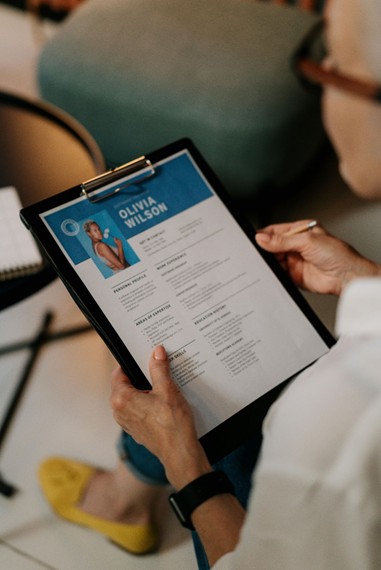
From Mediocre to Exceptional: Transforming Your Resume for Maximum Impact

Image via Pexels

Navigating today’s competitive job market demands a standout resume that does more than list your experiences – it must strike a chord with recruiters from the very start. Your resume serves as a crucial bridge between your career aspirations and potential employers, offering a snapshot of your professional prowess. It acts not just as a document, but as a personal advocate that articulates your unique strengths and career milestones. Here are some tips from Diane Delgado Lemaire to help you build a deeper understanding of how to present yourself as indispensable to prospective employers.

Creating a Standout Resume

AI-powered resume builders can quickly create polished, professional resumes, enhancing your ability to present yourself effectively. These tools offer personalized suggestions tailored to your unique experiences, making it easier to articulate your qualifications. By focusing on crafting content that succinctly showcases your skills, you can produce a standout resume that captures attention. Here’s a possible solution: leverage AI technology to ensure your resume not only reflects your expertise but also positions you as a top-tier candidate.

Data-Driven Achievements

Enhance your resume by quantifying your professional achievements, presenting impactful metrics like “boosted sales by 30%” or “reduced project timelines by 20%.” These statistics not only illustrate your effectiveness and efficiency but also provide prospective employers with clear, quantifiable evidence of your past successes. Incorporate precise data to vividly detail your impact within previous roles, emphasizing a mindset focused on results and continuous improvement. Such metrics play a crucial role in setting your resume apart in a sea of candidates.

Emphasizing Core Competencies

Concentrate on your core competencies relevant to the job you’re targeting. By highlighting key skills such as technical prowess or leadership qualities, you enhance the resume’s clarity and focus, making your most pertinent attributes stand out. This strategy not only streamlines your resume for easy readability but also aligns your skills precisely with the employer’s requirements. This targeted approach helps hiring managers quickly identify you as a candidate who meets their specific needs.

Integrating Relevant Keywords for Applicant Tracking Systems

Incorporate pertinent keywords from the job description to optimize your resume for applicant tracking systems (ATS). By embedding these terms organically, you boost your chances of passing through the initial electronic screenings and reaching a human recruiter. An ATS-friendly resume not only meets technical filtering requirements but also demonstrates your qualifications’ relevance to the job specifications, aiding your progress in the recruitment process and avoiding common pitfalls of ATS rejection.

Showcasing Impactful Projects

Enrich your resume by detailing specific projects that demonstrate your skills in real-world applications. Choose projects where your contributions were substantial, focusing on your problem-solving skills or innovative approaches to challenges. Clearly articulate the project’s goals, your specific role, the outcomes achieved, and any obstacles you overcame or inventive solutions you implemented. This section of your resume offers prospective employers a practical insight into your adaptability and impact, enhancing their understanding of your potential value to their organization.

Power Words for a Strong First Impression

Employ dynamic language and strong action verbs such as “led,” “created,” “streamlined,” and “initiated” to craft a compelling and authoritative resume. These powerful verbs project confidence and responsibility, attributes that are highly prized by employers and vital for making a strong first impression. By strategically using these terms, your resume becomes more engaging and assertive, effectively showcasing your proactive role and significant achievements. This approach ensures your resume communicates a strong work ethic and your commitment to delivering exceptional results.

Mastering the art of resume writing is essential for making a lasting impact in the job search process. An effective resume requires meticulous attention to detail and a robust portrayal of your professional journey. By integrating innovative techniques and leveraging modern tools, you can construct a resume that not only stands out but also authentically represents your capabilities and accomplishments. A well-crafted resume is your gateway to capturing the attention of hiring managers and securing your place in the competitive job market.

Discover transformative coaching and insights with Diane Delgado Lemaire.

Get the Edge: Advanced Techniques for a Dynamic Job Application

Image via Freepik

Navigating the job market can be daunting, but crafting an exceptional application package is crucial to securing your dream job. A standout application showcases your qualifications and demonstrates your genuine interest and fit for the role. This F&A Recruiter article will guide you through the essentials of creating a winning job application package, ensuring you capture the attention of hiring managers.

Tailoring Your Resume for the Role

To make your resume resonate with the hiring manager, customize it to reflect the skills and experiences most pertinent to the job. Begin by carefully analyzing the job description and align your qualifications accordingly. Highlight your relevant past roles and projects, and ensure these stand out at the forefront of your resume. This strategy not only shows that you are attentive but also that you are a suitable match for the job’s requirements.

Integrating Keywords from the Job Listing

Incorporating keywords from the job listing into your resume is crucial. Many companies use applicant tracking systems (ATS) to screen initial applications, and these systems often scan for specific keywords mentioned in the job description. By embedding these keywords in your resume, you significantly enhance your chances of making it past the initial screening and into the hands of a human recruiter.

Personalizing Your Cover Letter

A personalized cover letter is your opportunity to narrate your story. Explain why you are a good fit for the role and the perfect fit. Discuss your passion for the industry and what precisely drew you to the company and this position. Make your cover letter resonate with personal insights and genuine enthusiasm for the opportunity presented.

Preparing a Portfolio for Creative Roles

If you’re targeting a creative position, including a meticulously curated portfolio can significantly amplify the impact of your application. This portfolio should showcase a selection of your finest work strategically chosen to highlight your skills pertinent to the specific job.

Saving your portfolio as a PDF is advantageous as it preserves the layout and design across various viewing platforms. This tool can add page numbers to PDF documents and guarantee your portfolio is organized systematically, enhancing its appearance and functionality.

Showcasing Measurable Achievements

When detailing your professional experiences, use specific examples and quantify your achievements. For instance, rather than stating you increased sales, specify by how much, perhaps by saying, “increased sales by 20% through strategic inbound marketing.” This concrete evidence of your impact in previous roles proves your potential value to prospective employers.

Crafting a Compelling Professional Summary

Start your resume with a professional summary that encapsulates your essential qualifications and career aspirations. This brief section should be a snapshot of your professional identity, highlighting your most impressive achievements and long-term career goals. It’s your first chance to grab the employer’s attention, so make it count.

Maintaining Organization and Clarity

Ensuring your resume and cover letter are well-organized and easy to read is fundamental. Use clear headings, bullet points, and consistent formatting to guide the reader through your documents effortlessly. Each section should logically flow into the next, making your professional narrative easy to follow and understand.

Perfecting Your Documents

To avoid undermining your professionalism, meticulously proofread your application materials multiple times. Spelling and grammatical errors can detract from the quality of your application and suggest a lack of attention to detail. Take the time to review your documents, or have a trusted friend go over them to catch any errors you may have missed.

Your job application package is a pivotal tool in your career search. It reflects your professional persona, skills, and potential fit within a company. By investing effort into customizing, personalizing, and refining your application materials, you position yourself as a strong candidate who is attentive to detail and serious about your career aspirations. Remember that a compelling application is your first step toward landing that coveted interview and securing your desired job.

If you enjoyed this article, you can find more job search content on the F&A Recruiter website!

6 Common Reasons Why Employers Turn You Down Written by Alan Carniol

Link to article: https://www.interviewsuccessformula.com/job-search-advice/6-common-reasons-why-employers-turn-you-down.php

Turned Down

Gone are the days when getting a job was simple. Nowadays, a job seeker has to go through a number of hurdles just to get an interview. Even then, there are still a lot of obstacles that you have to overcome. With the stress that comes with an interview, you are bound to make a mistake if you don’t plan properly.


To make sure that you don’t waste all of your efforts, it will help you to know these six common reasons that employers turn people down for jobs.

Inappropriate attire – While dressing well is just one factor among many, it certainly will give you a better chance. Looking the part will give an employer the impression that you are serious and know why you are there. It can also give you added boost of confidence, knowing that you already look the part.

Not looking interested – Your answers may be good, but you don’t sound and look convincing. Everything in you should show that you want the job—from your look, facial expression, body language, and tone—to convince an employer that you’re really interested.

No confidence – You’re uncomfortable making eye contact, smiling, standing straight, and giving a handshake, which is why your interviews are going south. Having and showing confidence is something that many employers look for, especially in a position where you have to represent the company.

Talking negatively about a previous employer – We all have had bad experiences with our bosses, but this part of our lives should be kept private, especially in an interview. No employer wants to hear an applicant say bad things about their last boss when you can do the same to them.

Giving in to your temptation – Gadgets are a major part of our daily lives today, and taking your hands off of them can be a little hard, especially when you want to make one last quick text or call. But even though you might want to do that, it’s better to leave it turned off—or better yet, leave it in the car, where you can’t reach for it.

No concrete examples – You believe that you are the most organized and smartest person among your competition, and maybe it’s true, but even that won’t be enough if you can’t give quantifiable examples of what you know and what you can do.

Getting an interview is a big deal; it’s a step closer to getting the job you want. If you don’t want your efforts to go to waste, you need to make sure that you don’t make any of those six mistakes.

Here is an ideal résumé for a mid-level employee

Originally posted by Business Insider: Article

Jacquelyn Smith and Skye Gould

Having a ton of experience under your belt doesn’t necessarily mean you have an “impressive” résumé.

“You can have all the experience in the world — but if your résumé doesn’t stand out, if you don’t present that information in a well-organized manner, or if it doesn’t tell your story, nobody will take the time to look at your résumé closely enough to see all that experience,” says Amanda Augustine, a career advice expert for TopRésumé.

To get a clearer picture of what makes a résumé stand out, we asked Augustine to create a sample of an excellent one for a mid-level professional.

While your résumé may look different depending on the industry you’re in, the one below should serve as a useful guide for job seekers with about 10 years of experience:

good resume

5 Things on You Should NEVER Say or Do on a Resume

MAY 12, 2016 BY


Sometimes when I am reading resumes I feel like I should be a third grade English teacher rather than a recruiter.  Why do I say this?  I am simply amazed by the mistakes made on resumes.  The misspellings, the run on sentences, the formatting, and the blatant lack of attention to detail are simply astounding.  I need a red pen to mark up the resume.  As I have said more than once, even in the age of social media and LinkedIn, resumes are essential in your job search.

Do you know the song by Tim McGraw called “I Like It, I Love It” where he says “I throwed out my shoulder”?  Even if you aren’t a fan of country music, that song has been played on every radio station across America for the past decade.  Every time I hear it, I feel like someone is running their fingernails across the chalkboard.  It is “I threw”, not “I throwed”!  Why, oh why, would he say such a thing?!!  That is EXACTLY how I feel when I look at resumes that aren’t done well.

There are common errors that need to be eliminated.  I want to share with you some of those common errors and hopefully you will NEVER make these mistakes.  After all, a resume is a first impression and you may never get to an interview if your resume isn’t done correctly.

Here are 5 things you should NEVER say or do on a resume:

  1. Apply to a job that you have NEVER done without a Cover Letter or explanation. I am really struggling with this one.  This is my #1 pet peeve.  It is kind of like putting diesel in a car that only takes unleaded.  Why? Okay, if you want to change careers, that is cool, but tell me why you want to make a change and how you are able to do the job. Simple enough?
  2. Never apply to a job without a LinkedIn URL. Why in this day and age would you not have a LinkedIn account?  I just don’t get it.  If you are in the job market, don’t you know I am going to check your social profile? Also, if you want to hear more about how I feel about this, read here.
  3. Never compromise your resume & career by trying to cram everything on one page. The one page rule in my mind is ridiculous.  Who cares?  If you have had an established career and want to highlight what you have done, then please, by all means make it longer.  I think 2-3 page resumes are the norm today.  With all of the technologies and skills that are required of candidates, you better make sure you list the right skills the company is looking for in a candidate.  Do you think they care how long their job description is?  No!
  4. I don’t need your physical address or home phone. Guys, this is not 1995.  Everything is electronic, on social media, or on your mobile device.  I need your e-mail, phone number, blog site, LinkedIn (I’ll say it again), Twitter account, or whatever relevant information you can give me so I can research you.  I need to know what city you live in, but I don’t need to know your physical home address.  I really don’t want your home number either.  A cell is all I want and need.  I don’t need your grandmother answering a phone call and taking down your phone number.
  5. Please tell me CLEARLY what you did at your job (in CHRONOLOGICAL ORDER), what you accomplished, and what skills you have acquired. I don’t need all of your skills jumbled together with your company name and dates of employment at the bottom of your resume!  What are you hiding?  Look, if you have gaps in your employment tell me what you have been doing.  Have you been consulting?  Have you been going back to school?  Just spell it out for me.  I’ll likely pass on your resume if I can’t figure it out in 6 seconds, so make it simple!

Of course I am only scratching the surface here, but this is a good start.  Next week I’ll give 5 more pointers.  Please whatever you do, don’t “throwed” out your shoulder between now and then.

@willrecruits 

 
Read more at http://bullseyerecruiting.net/5-things-on-you-should-never-say-or-do-on-a-resume/#dZ0S27ZIkksZMw8w.99

5 Signs of an Outdated Resume Written by Alan Carniol

Remember that your resume is your personal brand! You are unique. Do not send a “canned” version of your resume! You want to stand out. I love when I see a LinkedIn address on a resume too!

5 Signs of an Outdated Resume

Written by Alan Carniol

http://www.interviewsuccessformula.com/job-search-advice/5-signs-of-an-outdated-resume.php

Now more than ever, the world is constantly changing. There are things that we do today that may not be the best way next week or next month. Like other things in life, the interview and hiring process is in flux. There are things that weren’t accepted before that are now expected, and if you’re not willing to adapt, you’ll be left behind.

One of the things that have changed over the years is resumes. Some of us have had difficulty keeping up with the changes in the modern resume. These are some of the signs that you may need to seriously consider updating your resume:

You’re still using an objective – Objectives are one of the most outdated parts of a resume. The focus of a company is to understand what you can do for them, not what you want for yourself.

Even better, consider using a headline instead. Why? Because it shows that you’re a confident individual rather than someone who is unsure of him or herself.

Written with pretentious words – Every job seeker wants to stand out, but using words to try to look like someone you’re not won’t help your cause. You have to keep it simple while also adding a little bit of personality to it.

Outline of positions without specific achievements – One reason why resumes have changed is because they don’t offer enough information to help an employer with their decision. It only shows what your previous positions and responsibilities were, while failing to explain what you accomplished.

Too simplistic – The old adage is that simple is better, but today when you want to stand out, keeping it simple might not be enough. Using font styles that are a bit more modern and avoiding decades-old layouts might be a good idea.

Too much old information – What’s important is what you did in the past two to four years, not what you did a decade ago. While those experiences will help you, what you’ve been doing recently is what matters most for an employer.

The difference between a good resume and a great one lies in subtle changes that can go a long way in gaining the attention of an employer. Being aware of these changes can help you get more interviews for the job you want.


Here are some other links:

http://www.job-hunt.org/personal-branding/stronger-resume-branding.shtml


9 steps for figuring out which skills to include on your résumé By Rachel Gillett

Link: http://www.businessinsider.com/what-skills-to-add-to-your-resume-2015-6?linkId=15219317&linkId=21311485

9 steps for figuring out which skills to include on your résumé

If you’re sitting in front of your computer, wracking your brain trying to come up with skills to add to your résumé, fear not.

With the help of some career experts, you can easily — and honestly — pad out your résumé with key skills recruiters look for.

Here’s how:

1. Consider some of the most common skills recruiters search for.

“The most common skills people forget to showcase are the transferable skills that recruiters use general search terms to find — things that can be measured,” says J.T. O’Donnell, a career and workplace expert, founder of career advice site,CAREEREALISM.com, and author of “Careerealism: The Smart Approach to a Satisfying Career.”

These include:

  • Software you are proficient in (MS Word, PowerPoint, Excel, Office)
  • Project Management
  • Marketing
  • Sales
  • Customer Service
  • Budgeting
  • Recruiting
  • Management

2. Specialize your skills.

The skills recruiters look for when they scan through résumés depend on the type of position they’re trying to fill, says Rita Friedman, a Philadelphia-based career coach.

For example, if you’re applying for a position that requires technical knowledge, include specific examples of technology or equipment you use, even if it could be reasonably assumed you must know these things, Friedman suggests.

3. Scan through a ton of job postings.

“To ensure that you’re including relevant information on your résumé, carefully review job postings and highlight the parts that make you say, ‘Oh, I do that all the time!'” Friedman suggests. “When you’re writing your own resume, it can be hard to be objective, and you may forget about things that you’re so good at doing they come to you automatically.”

4. Research people with the jobs you want.

Friedman and O’Donnell both suggest checking out the LinkedIn pages of people whose jobs you’d like. Check out their “Skills & Endorsements” section and identify which ones you could justify putting on your profile too.

5. Diversify your list of skills.

“When evaluating a résumé, recruiters are looking for two big qualities: hustle and curiosity,” says Kate Swoboda, creator of the Courageous Coaching Training Program.

She says employers today are looking for résumés that demonstrate the person takes initiative and is motivated by curiosity.

“These days, coders are now expected to interact with clients, and the person in charge of crafting the company’s next great tweet might also be called upon to help with some aspects of visual design,” Swoboda explains. “Recruiters are looking for people who are curious enough and motivated enough to go beyond their technical job description because that adds more value for a company.”

6. Don’t be afraid to make it personal.

“I’m very much in the camp of not hiding your personal life, skill set, and interests from a prospective employer,” says Michelle Ward, a creative career coach and co-author of “The Declaration of You!

She suggests including skills you’ve learned from outside passions, whether that includes owning an Etsy shop or planning your best friend’s wedding.

“I think, more and more, companies want to see a well-rounded, inquisitive, personable candidate that is right for the job and would be someone interesting to have in the office,” she says. “Just make sure to relate that experience back to how it’d be value for the company/position you’re applying for.”

7. Consider what you’re proud of.

Friedman suggests you make a list of the things you’re especially proud of accomplishing in your jobs and then think about what skills you used to accomplish these.

“If you reduced the amount of time it takes to complete a task, you may have strong skills revolving around process improvement or automation,” she says. “If you got back the business of a former client who left, you may have a talent for repairing damaged relationships.”

Ward adds that you should ask yourself, “What do people thank me for? What do I get complimented on, repeatedly?”

8. Quantify your skills.

Before you add any skills to your list, O’Donnell suggests you ask yourself a number of questions like:

  • How many projects have I led?
  • How many people were on the team?
  • How many customers were affected by my work?
  • How many people did I train?
  • How much money was involved?
  • What kind of results/savings did I get?

“If you ask yourself enough of these, you find your way to validate and quantify your experience in a way a recruiter can understand,” she says.

Friedman agrees and says it’s always better to show rather than tell on your résumé.

“For example, if you’re in sales, you don’t just need to hit keywords like ‘business development’ or ‘consultative selling;’ you need to have quantifiable examples of your skillset in action: ‘Increased sales over previous year by 63%.'”

9. Talk it out.

In determining if you have the skills necessary, when creating a résumé, talk about your experiences out loud with someone, preferably a professional or someone who has work experience,” suggests Alyssa Gelbard, founder and president of Résumé Strategists.

“They hear things differently and can help you translate your internships, jobs, extracurricular, and educational experiences into important skills for a potential job.”