


Keep in mind that your employer thinks you’re qualified for the job. The fact that you were called in for an interview should help boost your confidence. It means that you have a shot at being chosen for the position you’re applying for. Remember that employers are very busy, and if they take the time to call you in for an interview, that’s generally a good sign.
There’s never a perfect candidate. You may think that other candidates for the job are better at giving perfect answers to interviewers. However, this is not necessarily the case. Don’t aim for perfection, but instead strive to show who you really are as a worker and as an individual. Most applicants don’t give flawless interviews, so don’t be so hard on yourself.
Have some control during the interview. Though you may think you’re the one who needs something from them, it is still possible to have some control over the conversation while knowing your limits. You do have some power in this situation, and it’s never wrong to ask questions to help you decide if the job is right for you.
Going to an interview is similar to a business transaction. If you think of the interview as a business transaction, there’s really no need to feel intimidated. Try to view it as collaboration that can benefit both of you. When you view it in this light, being called to an interview need not feel like an interrogation.
Assume that someone may have gotten the job ahead of you. This is a mental trick you can play on yourself to help you relax during an interview. If you feel like you’ve got nothing to lose, you can feel at ease and respond without hesitation. Try it and you might be surprised at the results you get.
Understand that your employer probably doesn’t realize how nervous you are. If you think you’re completely transparent to the interviewer, think again. It’s entirely possible that the interviewer has no clue what you’re feeling inside. Therefore, you have an opportunity to make him or her think that you’re confident and self-assured.
Following the tips above should help you calm your nerves whenever you go in for an interview. Try these ideas out, keep those jitters at bay, and give yourself a shot at acing that interview.

Since job seekers can apply to a job with just the click of a button, job searching has become increasingly competitive. And it’s especially challenging for college students and recent college grads whose work experience primarily consists of student jobs, like unpaid college internships and part-time or on-campus jobs.
According to a recent study, employers spend an average of six seconds scanning your resume. About 80 percent of that time goes to reviewing your current and previous job titles and a few other professional key points such as position start and end dates and education level.
So how can college students better prepare themselves for the job market following graduation? To answer this question I spoke with Matthew Stewart, entrepreneur and co-CEO of College Works Painting.
College Works Painting is a unique college internship that gives college students the opportunity to run their own house painting business during the summer. According to internal surveys conducted, 90 percent of College Works Painting’s alumni find college-grad-level jobs within three months of obtaining their degrees.
Here’s what Stewart suggests for students looking to make the most out of their college career:
1. Get a challenging internship
According to Stewart, the solution for college students is to increase job experience while still in school. This means obtaining a hands-on internship every summer while in college.
“College students should be looking for experiences that will challenge them,” says Stewart. “When they get out of school they will be competing with thousands of other graduates.”
Stewart suggests the following to identify, qualify for, and get the best internship for you:
2. Treat your student job or college internship like a career
The easiest way to treat your student job like a career is to ask your boss to mentor you. Under the mentorship of your supervisor, you can expand your basic job functions and start taking your capabilities to the next level.
Since employers prefer potential candidates to quantify the accomplishments listed on their resume, take advantage of the professional relationship you have with your current boss. Work together to describe the quality of your experiences in language that will reflect well on your resume.
“College is not the time to relax, it’s the starting line, not the finish line,” says Stewart. “You need to treat college like it’s your future, and get ready for your life after college,” he says. “College consists of three summers, and by the fourth students should have what it takes to find a career.”
3. Be proactive and take initiative
Going above and beyond in your internship will set the foundation for your career. You’ll gain confidence by taking initiative, which is a core skill in the business world.
“It’s important to set goals. Everyone in history that has been successful was goal-oriented. It’s about setting goals and having a plan of action around those goals,” says Stewart. “I’m a big advocate of all sorts of jobs, and all sorts of internships that lead to the development of substantial work experience.”
4. Seek out promotion opportunities
You can seek out promotion opportunities in a several different ways. If you work for a larger company that posts job openings on their website, set up job alerts so that you get email notifications once a job is posted. At the same time, build a strong relationship with your mentor. Let him or her know how eager you are for more responsibility and advancement, and that you’re up for the challenge.
“Unless you graduate with a significant amount of real job experience, finding a job right out of college will be incredibly difficult,” says Stewart. “Gone are the days when a college degree came with a job offer stapled to the back of it.”
College students today face one of the toughest job markets in history. Entry-level jobs that previously went to recent college graduates now go to job-seekers with years of experience. A college student’s only choice is to graduate with impressive, real-world experience.
by Dana Manciagli | Jul 18, 2016


Interviewers have different styles when it comes to assessing an applicant and asking questions. Some do not show any facial expression, while others are more expressive. Some may be kind and accommodating, and some might be very hard to please. Even if you have prepared extensively for the interview and practiced answers to all possible questions, there will still be some uneasiness on your part. You might still get that little twinge of anxiety.
Although interviewers and hiring managers have different personalities, you can still prepare for them in advance and make them like you. Here are four of common types of personalities you might encounter:
1. The Statue—or the one who acts as if he or she does not have any emotions at all.
This kind of interviewer won’t give you any hint of how the interview is going. He or she can destroy your confidence if you’re not ready for this. However, you can still make him or her like you even if you’re clueless about whether you’re doing a great job or not.
How? Take your time to think and form your own answers instead on responding based on what you think he or she wants to hear. Impress your interviewer by showing how knowledgeable you are in the field or position you’re applying for. Most importantly, don’t forget that you are also interviewing him or her, so get past that poker face and ask him or her thoughtful questions regarding the company, including his or her experiences there.
2. The Interrogator—or the one who has a lot of questions.
The Interrogator is the type of interviewer who is eager to see proof or certification for every skill that you have in your resume. He or she is also interested in every move you make in real life and even in your social media activities. How do you turn this inquisitor into a friend?
Carefully listen to every question he asks, and be sure to give a complete answer that will address his concerns. Pick up clues from his questions, and figure out what the company values and needs. Prepare by bringing the materials (portfolio, certificates, diploma, etc.) that he might ask to see. If you forget anything, give him assurance that you will immediately send the information or proof that he needs after the interview.
3. The Persecutor—or the one who always looks intimidating.
Some interviewers tend to intimidate and get carried by the power they have over the interviewee. It’s either because they’ve been in the job for so long that they have already forgotten what it feels like to be an applicant, or it was an existing personality trait that developed during their years in the position. This interviewer will be a tough one, so you’d better prepare for this type, as well.
If you feel pressured, don’t let your guard down and avoid looking anxious. Show him that your knowledge of the industry covers a wide range. Make it clear to him that you can be an asset to the company. If he is hardly impressed by your accomplishments, you can still get back on track by expressing your interest in learning more about the job and the company.
4. The Unprepared—or the one who looks like he or she doesn’t care at all.
This one is the unorganized type of interviewer. He may not have known that he will be conducting interviews right at that moment. In other words, he isn’t prepared. In the end, you might just be the one doing the interview.
However, don’t let this situation quash your hopes of acing that interview. Because he isn’t prepared, he might end up asking you a lot of questions, which is actually advantageous for you. Explain your background, education, areas of expertise, and future career plans carefully. If the interviewer’s unpredictability raises red flags, listen to your intuitions. The interview is a chance for you to get to know the company too.
Always remember that whoever your interviewer is and whatever type of person he or she may be, you need to be professional and fully prepared. Show up early and be polite. Stay confident and never let the pressure affect your mind and body. If you follow these guidelines, it would be a mistake not to hire you.
Written by Alan Carniol

Metro Houston added 5,500 jobs in June, bringing total nonfarm employment to 2,998,700. The sectors recording notable growth in June were leisure and hospitality (+9,000 jobs), manufacturing (+1,900), and professional and business services (+1,600).
The sectors reporting the largest losses in June were government (-6,500) and construction (-4,400). The declines in government were driven by the temporary shedding of jobs in public education during the summer months.
Houston’s unemployment rate increased from 4.8 percent in May to 5.5 percent in June. Unemployment rates typically increase from May to June as it reflects the temporary decline of jobs in public education.

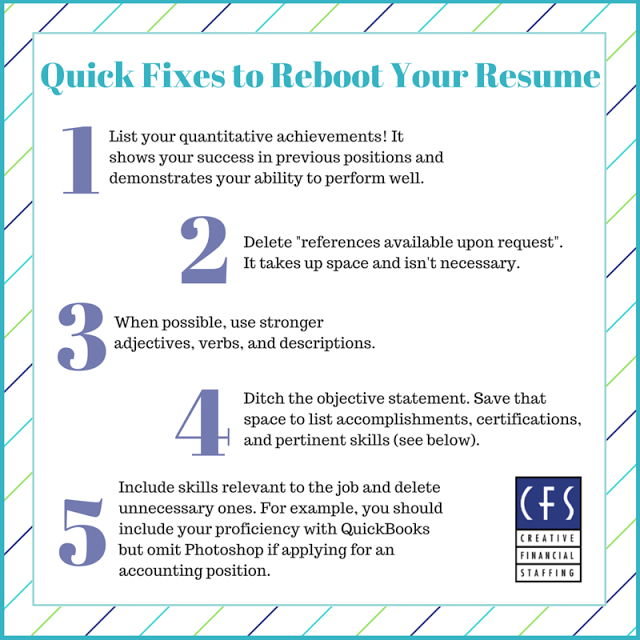
Feel like your resume is not as impressive as it used to be? Here are some tips on how to make a resume upgrade that will help you stand out among the rest.
It may feel like your original resume is a perfect reflection of what you’ve accomplished in the past. But it’s important to update it from time to time in order to build your personal brand effectively —a resume isn’t designed to stand the test of time.
Here are some tips to help you take your resume to the next level:
Highlight Your Career Achievements
Review keywords and match them with the job description. Sharing your achievements and what impact they had on the companies you’ve worked for is a great advantage. This will give recruiters a better understanding of what you can do for the company and how your efforts will make an impact on the organization.
Customize your Personal Brand
Know what sets you apart from the rest of the applicants. This means you have to know yourself, and determine what skills or experience will make you a better candidate.
Once you have that info, put it into your resume. Know your target and match your skills to what the company is looking for. Tailor your content to the appropriate keywords and phrases as much as you can.
Skip the Objective Statement
Today, including an objective is a waste of time, as well as resume space. Employers don’t consider them anymore.
Write Interesting Content
It is important to keep the content of your resume interesting to avoid creating a resume that’s just like everyone else’s. Perhaps you can use phrases that will set it apart from the others. If you need help, you can always hire a professional resume writer or search online for ideas.
Keep It Current
Add new skills or certifications you may have that aren’t in your resume. Update whatever you need to update and remove skills that are no longer relevant. Less is more, especially if you’ve been working for over a decade.
Proofread
This should be obvious. Your resume should be free of errors. You can ask a friend or mentor for assistance if you need a fresh set of eyes to evaluate and proofread your resume. Do not skip this step — a major typo can mean your resume gets quickly deleted or thrown away.
Though it can be easier to reuse the same resume over and over again, nothing surpasses an updated resume. Follow the steps listed above, review your accomplishments and get a picture of where you stand currently in your career to craft the right resume for your job search.

Alan is the creator of Interview Success Formula, a training program that has helped more than 40,000 job seekers to ace their interviews and land the jobs they deserve. Interviewers love asking curveball questions to weed out job seekers. But the truth is, most of these questions are asking about a few key areas. Learn more about how to outsmart tough interviewers by watching this video.

The Economy At A Glance:
Click to access Economy_at_a_Glance.pdf
Employment Update — Houston area employment was unchanged in May at 2,995,100 jobs, the same level at which employment stood in April. The region lost jobs in several sectors, added jobs in several others, and remained essentially unchanged in a few more. The gains offset the losses, resulting in the zero net job growth for the month. In the 35 years for which employment data are readily available, this stasis is unprecedented—Houston recording neither job gains nor job losses in a month. Examining job growth over a 12-month period helps to smooth out the impact of seasonal factors (retail hiring in the fall, education layoffs in the summer) that occur every year, and helps place current job growth in the context of historical job growth. For the 12 months ending May ’16, the region created 5,100 jobs, a far cry from the 66,400 jobs created in the 12 months ending May ’15, or the 98,500 jobs created in the 12 months ending May ’14. The most recent 12-month total underscores the weakness in Houston’s economy. If Houston experiences job losses in June, something that has occurred only twice in the past 35 years, Houston’s 12-month total may turn negative. That said, the job losses would need to exceed 2,000 to drop Houston into the red for the 12-month total.
Since December ’14, the start of the energy downturn, manufacturing has lost 31,300 jobs, energy, 24,700 jobs, professional services, 18,200 jobs, and trade, transportation and utilities, 12,100 jobs. Over the same period, hotels, restaurants and bars have added 25,600 jobs, healthcare 20,100 jobs, government (mainly education) 9,900 jobs, and arts, entertainment and recreation, 6,300 jobs. Houston’s unemployment rate remained unchanged in May at 4.8 percent. The Texas rate was also unchanged at 4.2 percent. The U.S. rate dropped from 4.7 in April to 4.5 percent in May. The Houston rate is now above that of the U.S. The rates are not seasonally adjusted.
On the Bright Side — Despite the current slump, Houston’s long-term outlook remains bright, according the latest report by The Perryman Group.1 “The Houston-The Woodlands Sugar Land MSA has stabilized after adjusting to job losses associated with lower oil prices,” the report notes. “Although additional fallout may well occur, it appears that the area is set for stronger growth. Over the long term, oil price recovery will lead to a resurgence in energy sector businesses, adding to the expansion across the rest of the area economy.”
Click to access Economy_at_a_Glance.pdf
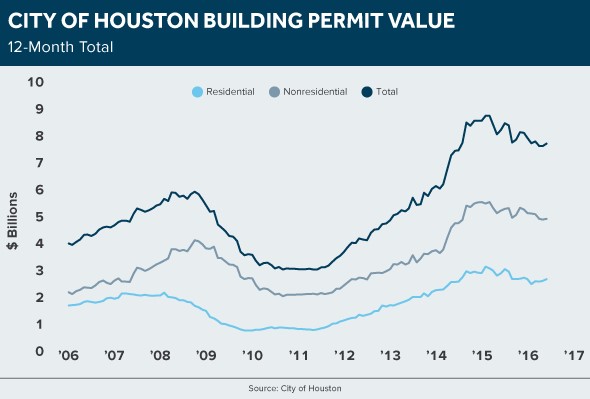
City of Houston building permits totaled $811.2 million in June ’16, up 12.7 percent from $720.0 million in June ’15, according to the City’s Department of Public Works & Engineering Planning & Development Services. June’s permit value is the highest on record for the month. Year-to-date, city building permits totaled $3.5 billion, down 10.4 percent from $3.9 billion over the same period in ’15.


Responsibilities:
Requirements

https://www.perrymangroup.com/
Texas’ largest metropolitan areas are set for relatively healthy growth over a long-term horizon. Business cycles will happen, but when we look out through 2040, the state’s major population centers are likely to continue to compare well with most parts of the country in terms of economic expansion. The Austin and Dallas areas should lead the way, with Houston, San Antonio, and Fort Worth also doing quite well. For reference, our most recent long-term forecast for the state economy indicates that Texas output (real gross product) will likely expand at a 3.35% annual pace through 2040, while total wage and salary employment grows at a 1.64% yearly pace.
The Austin-Round Rock Metropolitan Statistical Area (MSA) has been adding jobs at a notable pace, and is widely recognized as one of the strongest economies in the nation. For example, Austin was recently ranked atop a Forbes list of the nation’s 53 largest cities (“America’s Next Boom Towns”) as the city with the best chance to prosper in the coming decade. The technology-intensive MSA, which will likely see a notable stimulus from a new research-oriented medical school, is forecast to see growth in output at a 3.76% annual pace through 2040, with the manufacturing, services, and information sectors expected to see the fastest growth rates. Employment gains at a 2.02% yearly rate over the period are projected, resulting in the addition of almost 632,000 net new positions.
The Dallas-Plano-Irving Metropolitan Division has also been adding jobs at a healthy clip, with gains across most industrial sectors. Because the area’s diverse economy is more insulated from the energy sector than some parts of Texas, it has been performing better than the state as a whole. The real estate market continues to show strength, though over time it will moderate from the current elevated level. The Dallas area’s role as a business and financial services center for the state will contribute to ongoing economic stability, and emerging sectors (including technology industries) will lead to long-term growth. I am expecting that more than 1.33 million net new jobs will be created in the Dallas-Plano-Irving MD through 2040, representing a 1.75% annual rate of growth. Output growth is likely to be concentrated in the services and finance, insurance, and real estate sectors.
The Fort Worth-Arlington Metropolitan Division has seen the level of hiring pick up in recent months, though growth remains spotty due to the area’s exposure to the oil and gas industry. Businesses which have long been cornerstones of the regional economy (such as logistics) will continue to serve as a source of growth, and natural gas exploration and development will provide additional stimulus as prices recover. Output growth is expected to occur at a 3.43% annual pace through 2040, with almost 504,700 net new jobs through 2040 (a 1.61% yearly rate of growth).
Economic conditions in the El Paso MSA continue to improve, setting the stage for future gains. Expansion will be driven in part by the area’s strong ties to the Mexican economy, which is benefitting from structural reforms implemented by the government and is projected to expand despite current low oil prices. Although hiring has slowed in manufacturing firms across the border in Juarez, maquiladoras are expected to continue to be an important source of economic activity in the region. Output in the El Paso MSA is projected to grow at a 2.99% yearly pace, reaching $56.47 billion in 2040. More than 147,400 net new jobs are expected to be added through 2040, a 1.47% annual rate of growth.
The Houston-The Woodlands-Sugar Land MSA has stabilized after adjusting to job losses associated with lower oil prices. Although additional fallout may well occur, it appears that the area is set for stronger growth. Health care has long been a source of economic growth in the area, and recent construction and expansion projects are enhancing the role of the sector. Visitors to the area are also enhancing the economy, with tourism and business travel expanding. Over the long term, oil price recovery will lead to resurgence in energy sector businesses, adding to the expansion across the rest of the area economy. Output in the Houston area is expected to increase at a 3.35% annual pace through 2040, topping $1.12 trillion at the end of the time period. Almost 1.63 million net new jobs are projected to be added, a 1.70% annual rate of increase.
The San Antonio-New Braunfels MSA has been affected by lower oil prices and the resulting slowing of activity in the nearby Eagle Ford Shale. Even so, the area is adding more jobs in other sectors than are being lost in energy-related industries. The region continues to attract locations in emerging technology industries. In addition, the area’s important tourism industry will benefit from completion of a $325 million renovation of San Antonio’s Henry B. Gonzalez Convention Center and ongoing improvements to the adjacent Hemisfair Park, Alamodome, and Alamo Plaza. Over the long term, as oil prices recover, the development of regional oil resources will generate significant jobs and business activity. Output is forecast to grow at a 3.27% annual pace, reaching $227.30 billion in 2040. Almost 512,400 net new jobs are likely to be added through 2040, a 1.62% yearly rate of growth.
Texas’ largest population centers drive economic progress for the state, serving as centers for business activity. The long-term prospects for these metropolitan areas are favorable (though there will be cycles), with expansion across a spectrum of industries driving overall growth.

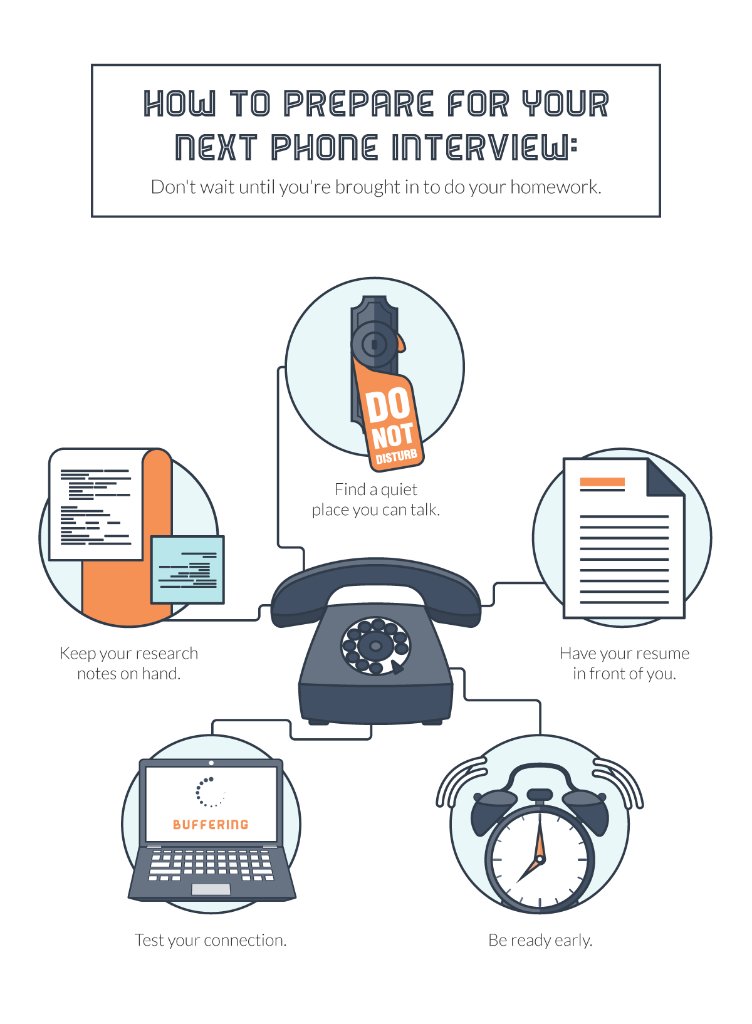
Job interviews can be a tense time for candidates, the nerve-wracking situation often makes them talk faster and sell themselves harder.
Lorraine Kitchin, star of the first episode of The Job Interview, was privy to one such experience in a previous episode of the show – when a candidate wouldn’t stop chattering.
Speaking to Recruitment Grapevine, she revealed her own tactics for hiring a new employee: “Think about the whole person you are looking for; loyal, stable, committed and a little bit of something that others do not show you on their CV.
“Then, of course, relevant work experience that you think you can work with. If not, ask yourself if they need training. If so, can you train them further?”
However, not all applicants react the same way during the hiring process. A recent article by Business Insider listed nine sayings that candidates utter making them appear lazy to their future employer.
How many have you heard before? Tell us in the comments…
 When it comes to career building, connecting with the right people is a must. Social media platforms make finding potential clients and contacts easier than ever.
Here are some tips for using different social media platforms in order to help build your career network:
Know what you want. Be clear and direct about what you want. What is it that you’re looking for? Don’t be afraid to ask about potential opportunities directly. Keep in mind that it pays to be appreciative and sincere whenever you send a message, especially if you’re the one asking for a favor.
Join a Facebook group. It’s easy to join a group on Facebook — and you can connect with people in the same field or business community. If the group is closed or invite-only, feel free to request access by clicking the “Ask to Join” button. Often there are people in the group who are willing to be of help to fellow group members.
Mention people on Twitter. The best way to catch someone’s attention on Twitter is to mention his or her name in a tweet. Simply type “@username” in your tweet to notify him or her. This is a great way to start a conversation.
Don’t be afraid to use hashtags on Twitter. Typing the # symbol is an effective way to categorize your tweets. Once a person clicks on a hashtag, other tweets marked with that word or phrase will show up. Maximizing the use of hashtags will help you meet new people and discover new contacts to follow as well.
Contact event organizers on Meetup.com. Event organizers tend to be well connected, so it’s a great idea to reach out to them and ask them to help you find other appropriate people in your field of expertise. Don’t forget to send a nice email and ask for what you want specifically. It also helps to attend an event to solidify the connection, while bringing the opportunity to even more professional connections.
Connect with your LinkedIn contacts personally. Since more users on LinkedIn prefer to connect with people they know, don’t hesitate to make the first move to meet a potential connection. If the person is in another city or state, try to coordinate if you both are attending an event or conference in the same town. You can also make use of the tech world by scheduling a meeting through Google Hangout or Skype. Always make a strong impression by knowing what you want. Do your research and be prepared.
Discovering new leads and building your career online is important on the road to success. Take advantage of the different social media platforms available and discover new career opportunities.
Alan is the creator of Interview Success Formula, a training program that has helped more than 40,000 job seekers to ace their interviews and land the jobs they deserve. Interviewers love asking curveball questions to weed out job seekers. But the truth is, most of these questions are asking about a few key areas. Learn more about how to outsmart tough interviewers by watching this video.

It’s Sunday evening and nothing can prevent the inevitable- tomorrow marks the beginning of another workweek. We are all too familiar with what comes next; it’s as if panic ensues at the mere thought of another Monday. Why is that? How can one day have such a negative effect on us?
As you consider everything you hate about Mondays, have you ever thought that you could be the problem? Mondays should resemble a fresh start, but that’s only possible if you have the right mindset. We spoke to some of our expert recruiters about how they tackle the Monday blues:
Executive Recruiter – Houston
Some people say breakfast is the most important meal of the day. Similarly, I believe that Monday is the most important day of the week. Some tips that will help get you into a positive mindset are:
Branch Manager – San Antonio
There is no perfect way to approach a Monday, but I have a few basic routines that work for me. One thing I like to do is keep a list of 2-3 success stories from the previous week. Whether it was landing a new deal or mastering a new skill, I re-read them on Sunday night before I go to bed. I look the list over again when I wake up on Monday and doing so gets me excited and focused on my sales/management plan for the week ahead. Another thing I like to do is work out on Friday, Saturday, and Sunday and go to bed early on Sunday. After a few consecutive workouts, I am left feeling more energetic and ready to tackle any task that comes my way. Plus, a good night of rest is the perfect thing to start your week off the right way. Lastly, I watch funny or inspirational things while I drink my morning coffee. It’s also good to have a motivational playlist with various songs and podcasts for your daily commute. Motivation Monday really makes a difference!
Executive Recruiter – Pittsburgh
I think hitting the ground running on Monday morning is crucial. My usual plan is to come into the office on Monday ready to rock and roll, which is why I tackle my toughest calls first. Not only do I feel accomplished afterwards but doing so sets a great tone to the week. If you have a solid and productive Monday then the rest of your week will follow.
The Monday phenomenon should not be associated with dread or panic, but instead with excitement and positivity. Use these tips to establish a positive outlook when Monday rolls around. The workweek will not only start off on a happier note but you will no longer experience a “case of the Mondays”.
How do you overcome the Monday blues? We’d love to hear your tips in the comments below!

#DidYouKnow: 21% of hiring managers say that they’d be less likely to hire a job candidate who has a weak handshake.
#DidYouKnow 60% of employers say it’s a deal breaker if a candidate appears arrogant or entitled in a job interview.
#DidYouKnow: 76% of full-time employed workers are actively looking or open to new job opportunities.
#DidYouKnow: 9 in 10 employers make up their minds about a candidate by the 15-minute mark of a job interview.

 Houston's F&A Recruiter and Talent Connector